


In The Kingdom of Orcas

Orcas: The Social Whales
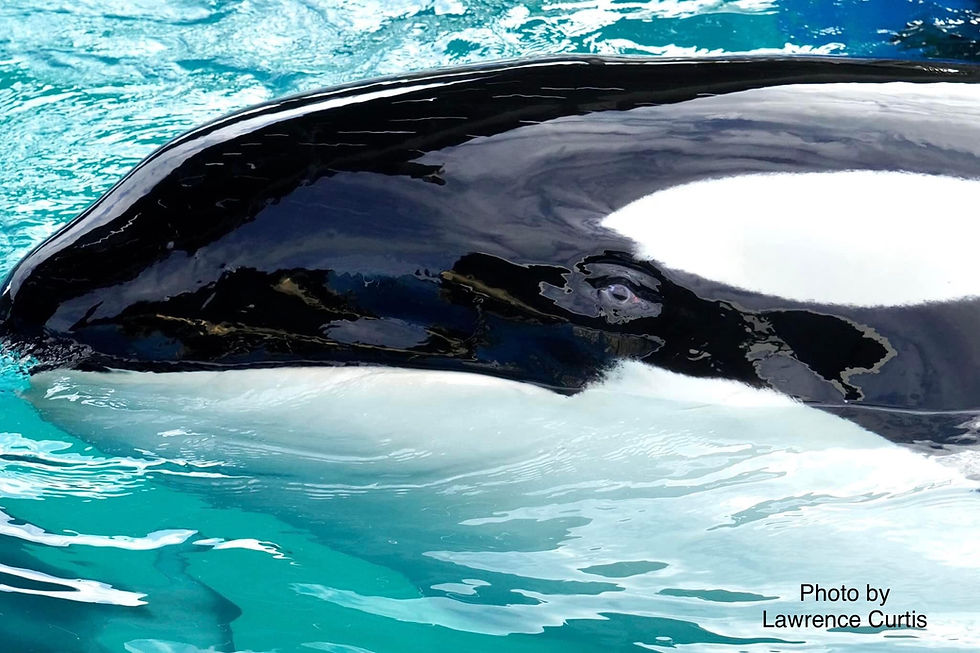
Whales have societies, each of which have unique dialects and lifestyles. Orcas are the largest members of the dolphin family, and the most widely distributed of all whales and dolphins. They have minor differences in appearance (eyepatch shape, saddle patch shape, rostrum shape), behavior, ways of communicating, and diets depending on where they live. They are highly intelligent, fast swimmers, and social animals that hunt in groups. They use echolocation to communicate and hunt, making sounds that travel underwater until they encounter objects, then bounce back, revealing their location, size, and shape. Orcas are protective of their young, and other adolescent females often assist the mother in caring for them. Mothers give birth every three to ten years, after a 17-month pregnancy. They give birth to one baby at a time, which may nurse for up to two years. Orcas are still hunted in some countries, such as Greenland. They also face threats from environmental pollution, sound pollution, and overfishing. Orcas are fascinating and complex creatures that have much to teach us. By learning more about their societies and lifestyles, we can better appreciate and protect these amazing individuals.
New Zealand
Orcas in New Zealand have complete control over their domain. Their particular implementation of teamwork that sets them apart from any other orca ecotypes. Their favorite hobby is a perpetual game of hide and seek. Three kinds of rays hide somewhere among the rocks and shallow shores. These orcas have to locate them if they want to feed. The first step is to disperse. A mother orca leads the hunt, having inherited everything from her mother (such as how to maneuver her 4-ton body through the narrow channels without getting stuck). They use echo-location, a series of clicks that reflect off their environment to spot the quick stingrays. They then turn the ray upside down, which makes it unconscious. This particular ray-hunting technique has been primarily observed in New Zealand orcas. The rich organs inside contain the nutrients they require, so they collaborate to catch their prey. A family can consume a dozen or more rays a day. It takes a lot of energy to fuel their 15-pound brains. The feast nourishes their stomachs and reinforces their bond. Tactics for success vary a bit depending on where orcas reside. When people observe them underwater, they realize they actually have very rich lives and complex behaviors. How they feed, or what they learn about their local water, how they socialize, their parenting methods: these animals have societies and lifestyles. These orcas are friendly and inquisitive, traits that help them adapt to the world around them. But it doesn’t always benefit them. Whales, dolphins, and porpoises all breathe air like people do. The World Wildlife Fund states that nearly one thousand whales, dolphins, and porpoises die every day in fishing related gear, including nets. In cases that involve orcas, it is because they are playing with them or attempting to feed off of dead fish caught in the nets.
Norway
Some orcas in Norway form their traditions around a fish. Orcas there use pulse calls to summon their pod in an attempt to herd the herring into a ball. Once enough pod members are present, a matriarch's contact calls turn into instructions. She will tell another orca to go below and flash their white belly to scare the herring. Another will blow bubbles to push the fish to the surface. Then, the matriarch hits the ball of fish with her tail, stunning some. This is a multi generational tactic, but there are new obstacles and new rivals. A fishing boat can haul up hundreds of tons of herrings a day. Instead of competing with humans, these orcas learn to benefit from them and pick fish from the net. Thousands of years of tradition change in a moment, but this is also not without risks. There have been reports of juvenile orcas getting caught in the nets and brought on board the ships. Regulations dictate that they must throw the orca back even at the cost of releasing the fish, but this is a relatively unmonitored practice that relies heavily on the integrity of the captain and crew of fishing vessels.
Antarctica
For orcas, raising young is a task that incorporates the aid of the entire pod. The orcas of the freezing waters of the Antarctic peninsula in the southern ocean are among the smallest on the planet. They spend so much of the year here that their skin takes on a yellow tint is from algae. The cold water stops new skin from growing and they can’t shed their old. They’re among the world’s most social orcas, with as many as 75 orcas in one pod. They can live as long as humans but have relatively fewer calves, so each newborn is treasured. Many orca pods in this region don’t hunt fur seals, and so live in harmony with them. While some pod depend on numbers, others don’t have that luxury. Smaller families must work with what they have: unique knowledge passed down from one generation to the next.
The Falkland Islands
Some orcas in the Falkland Islands face a foe many times stronger than Antarctic Fur Seals. To feed their family, they try to infiltrate the largest elephant seal colony. A female elephant seal weighs nearly a ton, a big male can weigh even more. These orcas have a finely tuned strategy of an ambush learned from their ancestors. They wait until sundown when elephant seals go out to fish. They know when they go in and out of the water. Their top fin acts as a rudder, but for this trick they have to keep it hidden. Once they’re ready, they grab the targeted elephant seal in shallow water and bring them into the sea. This only the first step, elephant seals are heavily armed with teeth and nails. Their family in training then help to keep the seal from escaping. This hands-on test is the key to their future. The eldest offspring is like a copy of their parents. If they learn the skills they need, it will be their job to keep their way of life alive and pass the family's customs down to their offspring. For now, this small family of females rules the Falkland Islands together. But legacy is never guaranteed. For an orca pod to have a future, they must pass down valuable family knowledge.
Patagonia
Some orcas in Patagonia perform the most amazing feat of all. Catching sea lions off the beach takes the wisdom of an elder. A 40-something grandmother is the best teacher in the pod. She teaches her family to do the impossible with a time tested playbook. First, know where to go. Tide and conditions must be right. Second, listen to the sound of movement on pebbles, the sign that a pup is in the water. They do their best to hide their dorsal fin, be patient, and wait for a wave. It is most important not to get stuck on the beach. They make it look easy, but they spend their lives mastering this technique. Only those taught by an elder learn to master this art, as few as twelve orcas in the entire continent. Most of these orcas were taught by their grandmother, and some of them learned the family trade. First, they had to get comfortable in the surf. The matriarchs would actually bring seaweed to the young to use it for practice. But seaweed couldn’t escape, they had to train with the real thing. The matriarchs then caught a sea lion so their granddaughters could learn the family strategy for survival. Keeping the prey alive and letting it go in open water, this practice helped the young to learn to handle live prey. It taught them to work together and brought the pod closer. Young orcas, with a grandmother showing them the way, were nearly five times more likely to survive.
Conclusion
This is what societies and lifestyles look like for many whale species. They sharpen their incredible skills, master their craft, and pass their knowledge down for generations to follow. They seem so much like us, yet we’ve only begun to reveal the secrets of the whales. Some people have explored the world of whales, and witnessed some remarkable encounters with these individuals. They’re the apex predator of the ocean. Other whales fear them, sharks certainly fear them, but there’s no known record of an attack by an orca on a human in the wild. This may be because of their recognition, in us, of intelligent behavior. They may have either respect or fascination for that. They must see us, in some way, very differently than anything else in the ocean.
If anyone would like to help me, please follow me on Instagram, X, and/or Facebook, Instagram if you pick one. You can also create an account here on the site and comment. Those are the best ways to grow the legitimacy of my site and what I do. In any case, to the community of Orca lovers, thank you for being my new home.
Instagram: https://www.instagram.com/orcawhisperslife/


Comments